
Is Work Comp's Great Run Ending?
Key takeaways from the WCRI Conference

The annual WCRI conference just wrapped up and the great team at WCRI did a wonderful job of highlighting the key areas impacting the work comp space.
Cost per Claim is on the Rise
For years, workers’ compensation was the quiet success story of the P&C world. Combined ratios that made other lines jealous. Steady results. A “calm and stable refuge,” as one presenter put it, while the rest of the market churned through catastrophic losses.
That era may be ending.
WCRI’s State of the States data showed total cost per claim growing at 6% annually as of 2025, a significant acceleration from the 2-3% steady-state growth that defined the prior decade. The jump started in 2022 and hasn’t let up. Three forces are driving it: rising medical payments, higher indemnity benefits, and ballooning benefit delivery expenses.
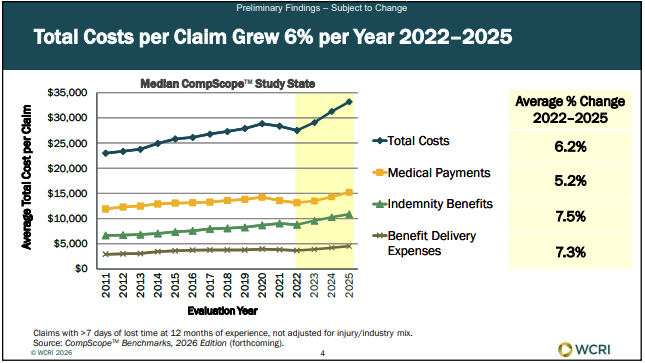
On the medical side, hospital outpatient costs are climbing 4% per year. High-cost claims, defined as those exceeding $50,000 in medical payments, represent just 6% of claims but account for 40% of all medical payments. In some states, that figure exceeds 50%. Small movements in this tail have outsized consequences for the whole system.
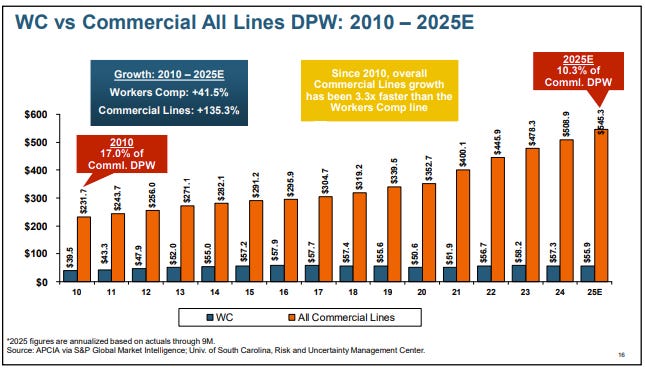
Robert Hartwig closed out Day 2 with the keynote, and his macro read was sobering. Workers’ comp has shrunk from 17% of all commercial P&C premiums in 2010 to just 10% today, even as the broader commercial market grew at 3.5x the pace of workers’ comp. The line performed well precisely because it didn’t need rate increases. But flat premiums during a period of rising claim costs is a math problem that eventually comes due.
The profitability that defined the last decade was real. But it was built on stable payroll exposure, low medical inflation, and declining claim frequency… all of which are shifting simultaneously.
Are stakeholders ready for what comes next, or are they counting on a few more years of stability?